Kickframe Newsletter
Michel Tjoeng on building your first AI agents, plus platforms fight back against AI slop

One of the best parts of recording these short videos is reconnecting with brilliant people, some of whom I haven’t spoken to in years. This time I caught up with my old friend Michel Tjoeng. Michel has had an amazing career: technology consultant, global head of digital at De Beers, and now founder and AI Leader of ChatLabs. In our chat, he shares helpful advice on how to build your first agents and how to use them to be more creative and effective in marketing.
(And to my other former colleagues I haven’t spoken to yet: consider yourself warned, the Kickframe newsletter is coming for you!)
AI Slop
A few weeks ago, I shared research showing how much content on different platforms is AI-generated (40% of LinkedIn longform posts). Now platforms are starting to respond. LinkedIn is rolling out a “Seems Like AI Slop“ button. Substack is working with Pangram, the same company behind the original research, to add AI detection to its platform, along with letting creators add a “How I make this” statement. Some Substackers are pushing back, calling AI detection a “witch hunt“ and arguing they shouldn’t be penalized: “Using AI improves the overall quality of my writing. That’s why I use it.”
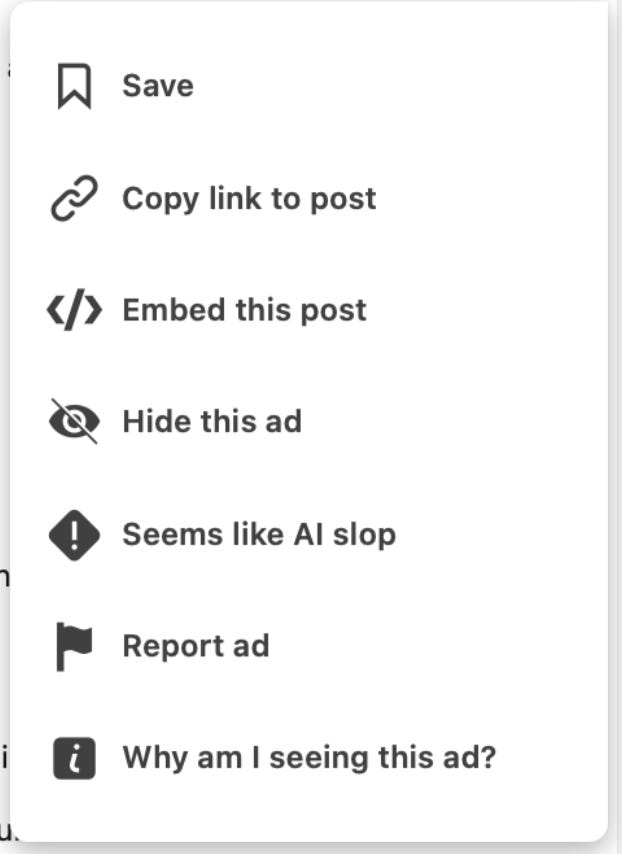
I have mixed feelings here. Like everyone, my LinkedIn feed is overrun with AI slop. It has made my time on the platform worse, and as someone who posts there, it has diminished my reach. At the same time, I use AI to help with this newsletter. Helpful for editing and sourcing links. If anything, I find myself drawn to voices that feel distinct and authentic – which is probably a good reminder for brands and creators. So I continue to write – it might be sloppy, but hopefully not slop.
AI + Mental Effort
One of the reasons people are so turned off by AI slop is that, for those who do spend the effort to create something themselves, it feels too easy. Like cheating. This is an outstanding article on that topic. It argues that ultimately what will differentiate people is not how smart they are but their relationship to mental effort.
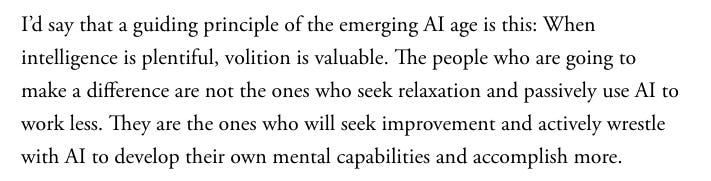
It explores the downsides of the “hollowing-out” that happens when people passively offload cognitive tasks to AI. It also provides some smart tips for anyone finding they use AI reflexively, to make sure you maintain your own “volition”: start with a blank page, ask for hints, and make a distinction between rote and creative work.
AI in Charts
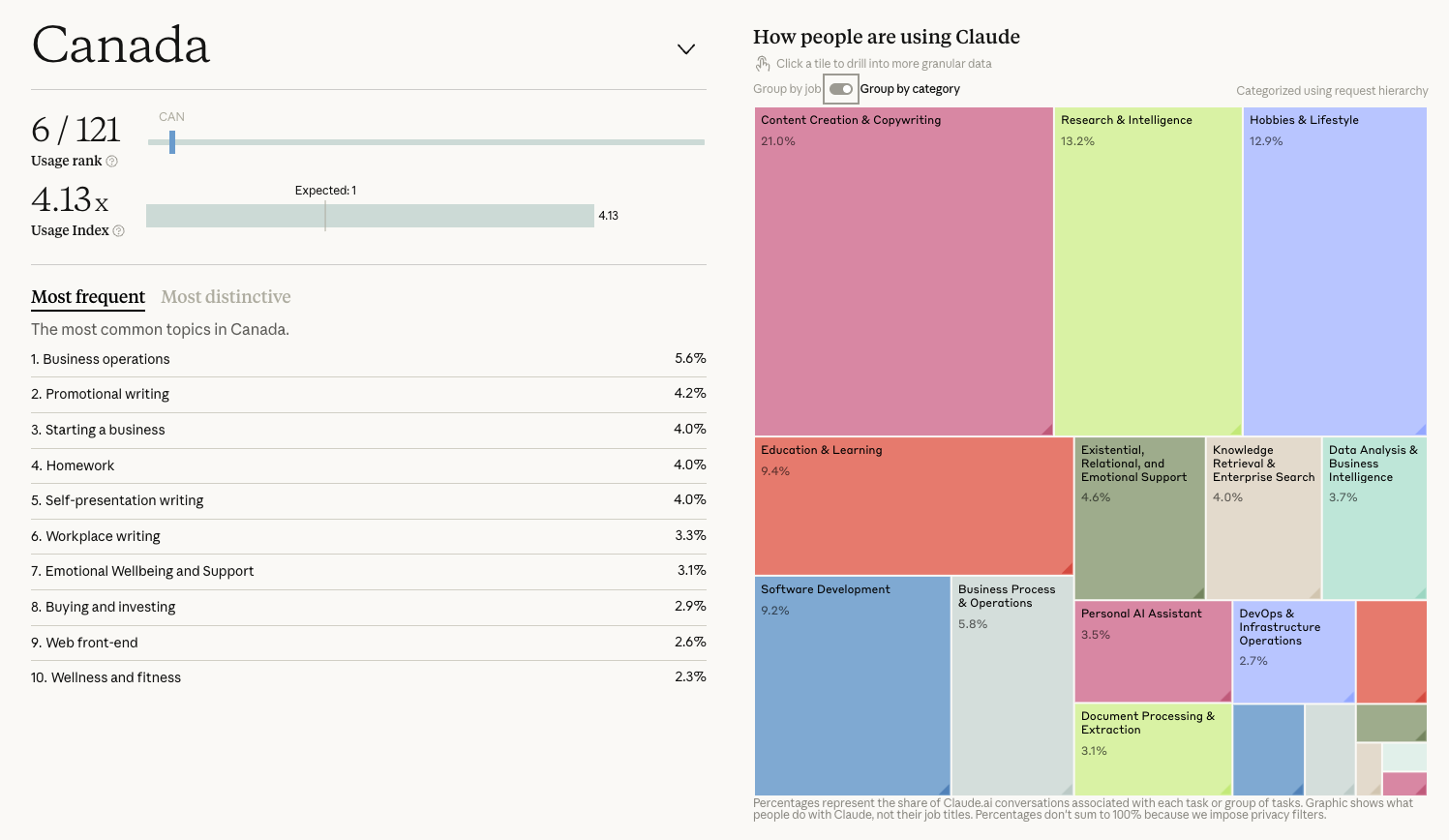
Anthropic Economic Index (Anthropic): Canadians use Claude most for business operations, especially content creation and copywriting (promotional, self-presentation, and workplace writing).
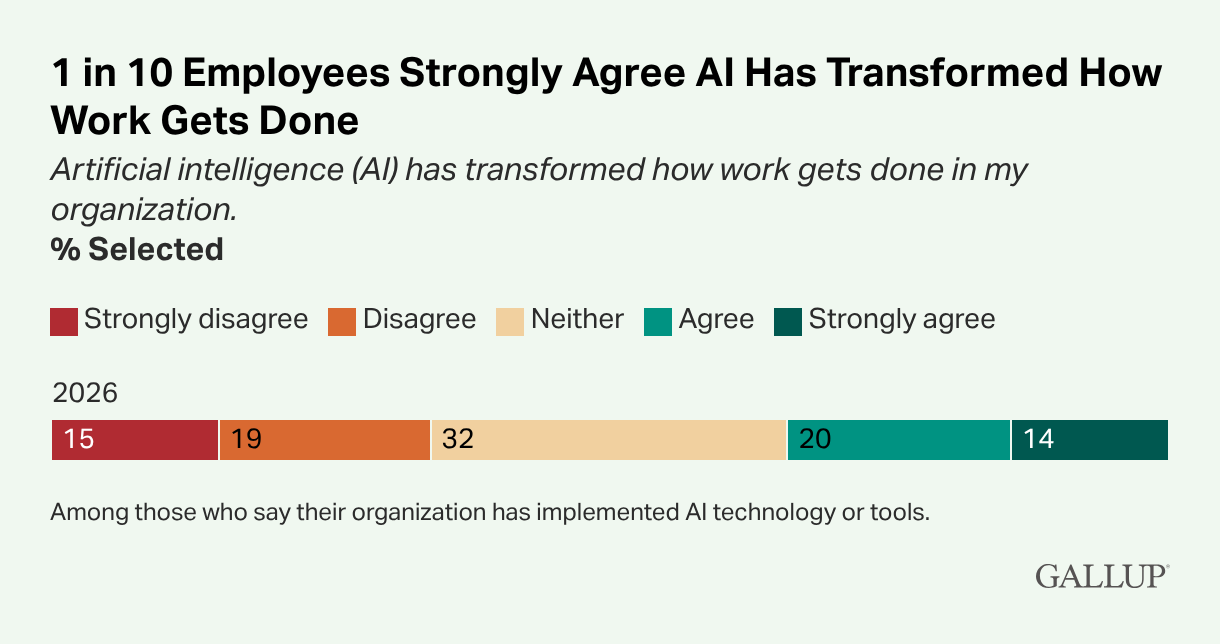
Artificial Intelligence Indicators (Gallup): Only 14% of US employees agree that AI has transformed how work gets done; most appear to be using AI to enhance existing workflows instead.
AI & Economics Atlas (Google): AI is being adopted across every industry and most occupations, covering 90% of US employment. Yet within individual jobs, it’s typically applied to only about 21% of tasks.

Cool Beans
Anti-AI Fonts: A new typeface displays two different messages depending on how it’s viewed. One message is a decoy for AI scanning, the other an optical illusion read by humans but not by AI.

Spotify Run Mode: I only run when being chased, but if I did, this new set of presets on Spotify looks cool. I don’t love my Spotify screen being so covered with video podcasts these days, but this feature makes sense.
Dog Sharing App: Want to hang out with a dog for a few hours without actually owning one? This Chinese pet-sharing platform lets anyone rent other people’s dogs by the hour.
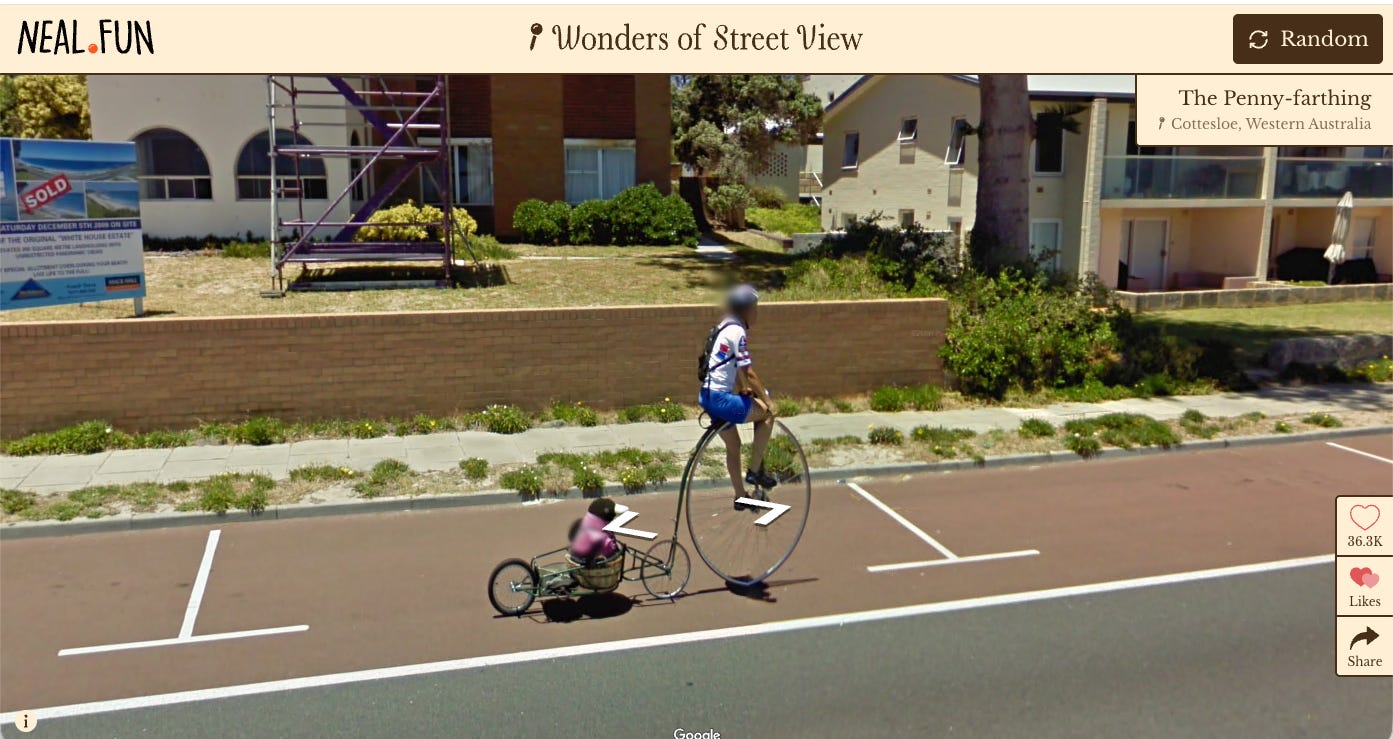
Wonders of Street View: I include a Cool Beans section every newsletter for exactly this reason. The web can still be so amazing and weird. I dare you to go to this site and click ‘Random’ fewer than 20 times.