This week I hosted my quarterly AI + Marketing Share & Tell, where I share what I’m learning about putting AI to work in teams and we compare notes on what’s working. This one was focused on the AI dividend, and what we choose to do with the capacity AI gives back.
The AI Dividend
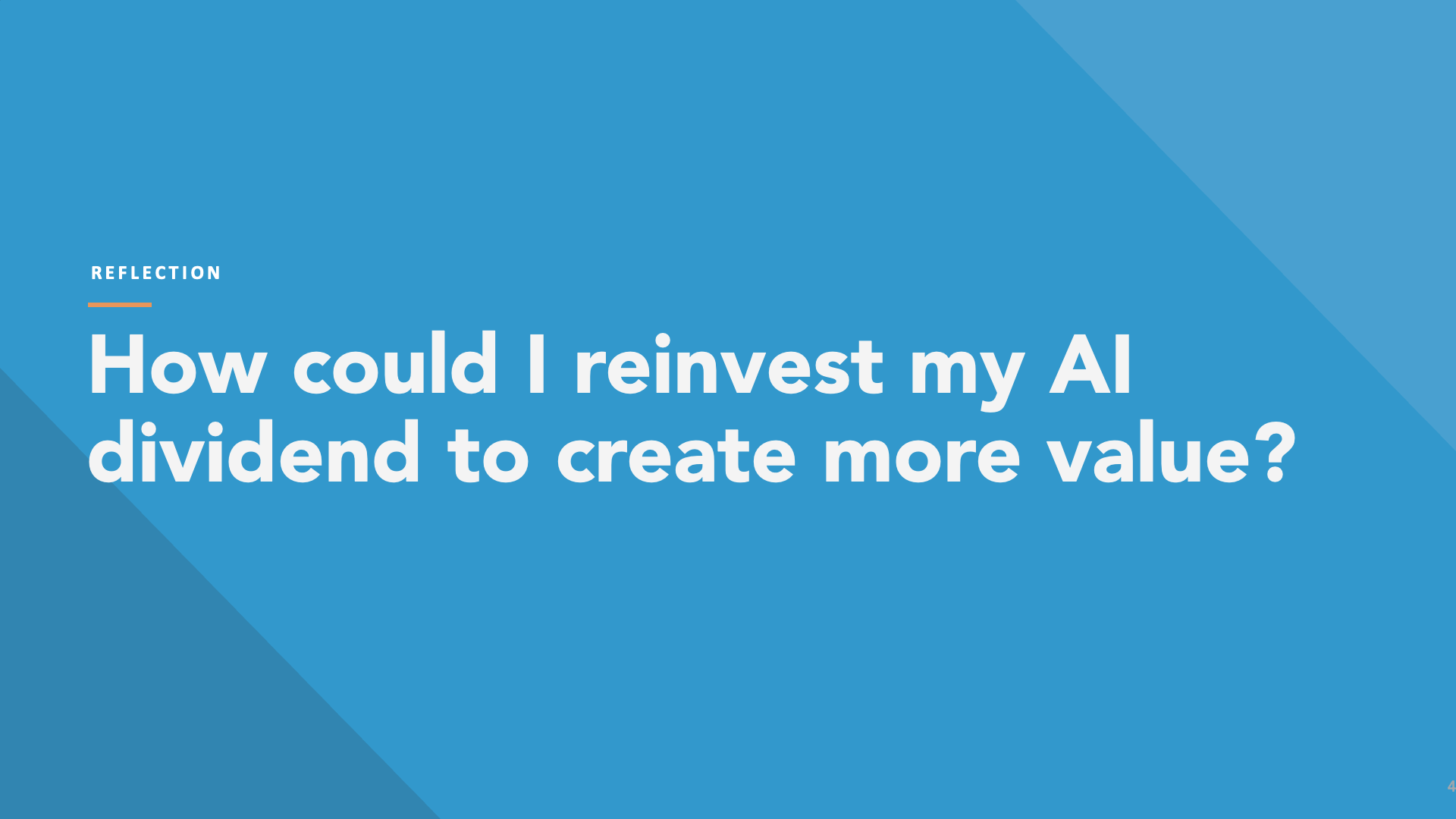
The concept comes from IDEO. When AI makes work faster or cheaper, that savings represents a dividend of human bandwidth and organizational capacity that can be reinvested into growth and innovation. They argue that the organizations that win in the coming decade will not be the ones that automated fastest, but the ones that invested wisely in areas where human creativity and judgement reign.
Most organizations aren’t reinvesting it. McKinsey’s latest State of AI found that about 80% of both high performers and other organizations are pursuing efficiency gains from AI. The difference shows up in what they do next: nearly 75% of high performers have fundamentally redesigned workflows, compared with 25% of everyone else. Everyone is chasing efficiency, far fewer are doing something different.
Starting with a different question
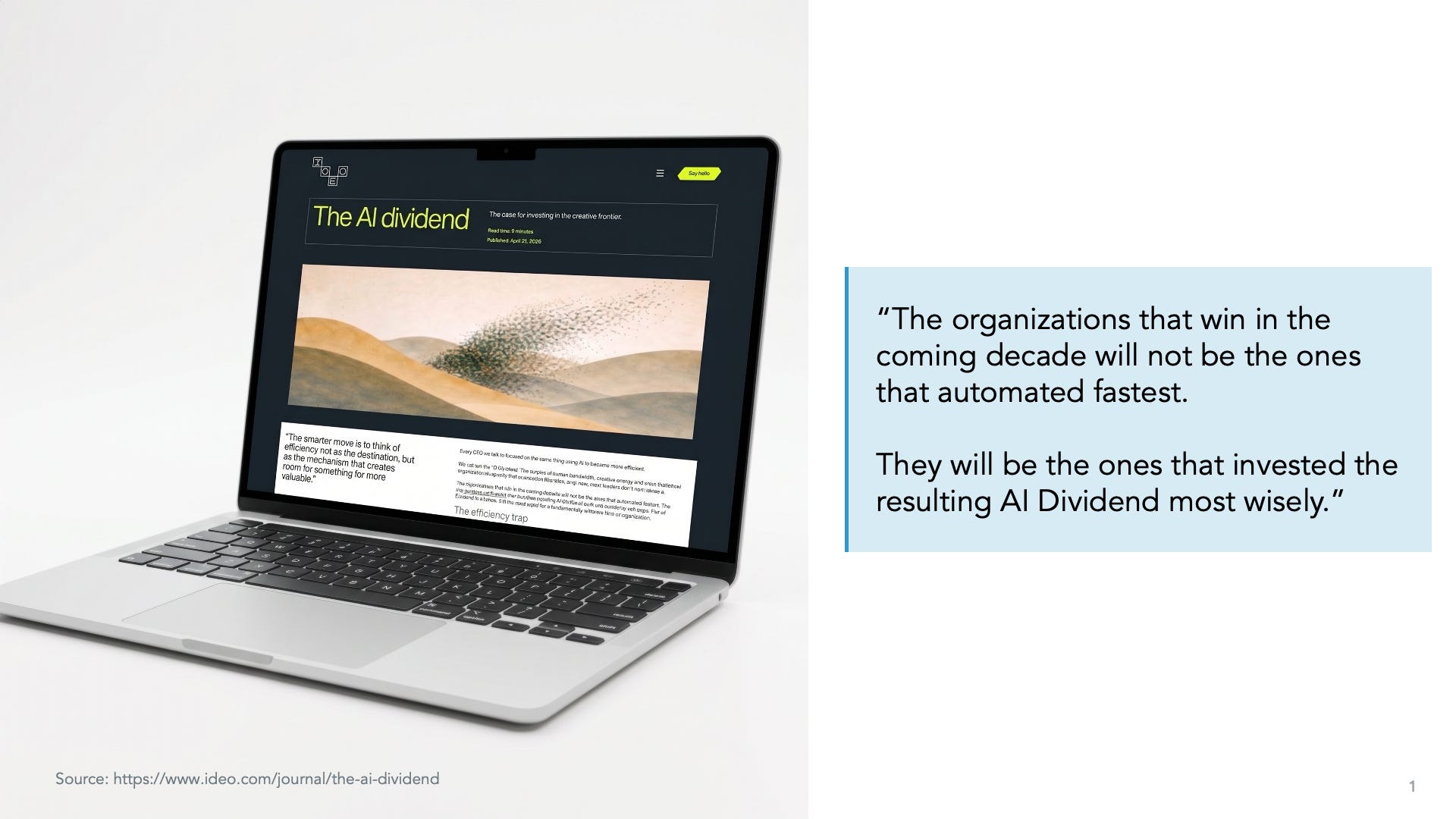
The question you start with determines what you find. Ask “how can we produce this thing more efficiently with AI?” and you get a faster version of what you already do. Ask “what is this thing for, and is there a better way to deliver it now?” and something else opens up. I recently worked with an organization where we widened the frame of what we considered when exploring AI opportunities, and it was really powerful. We worked back from the job to be done, then looked at where AI could enable it.
Applying it to my own work
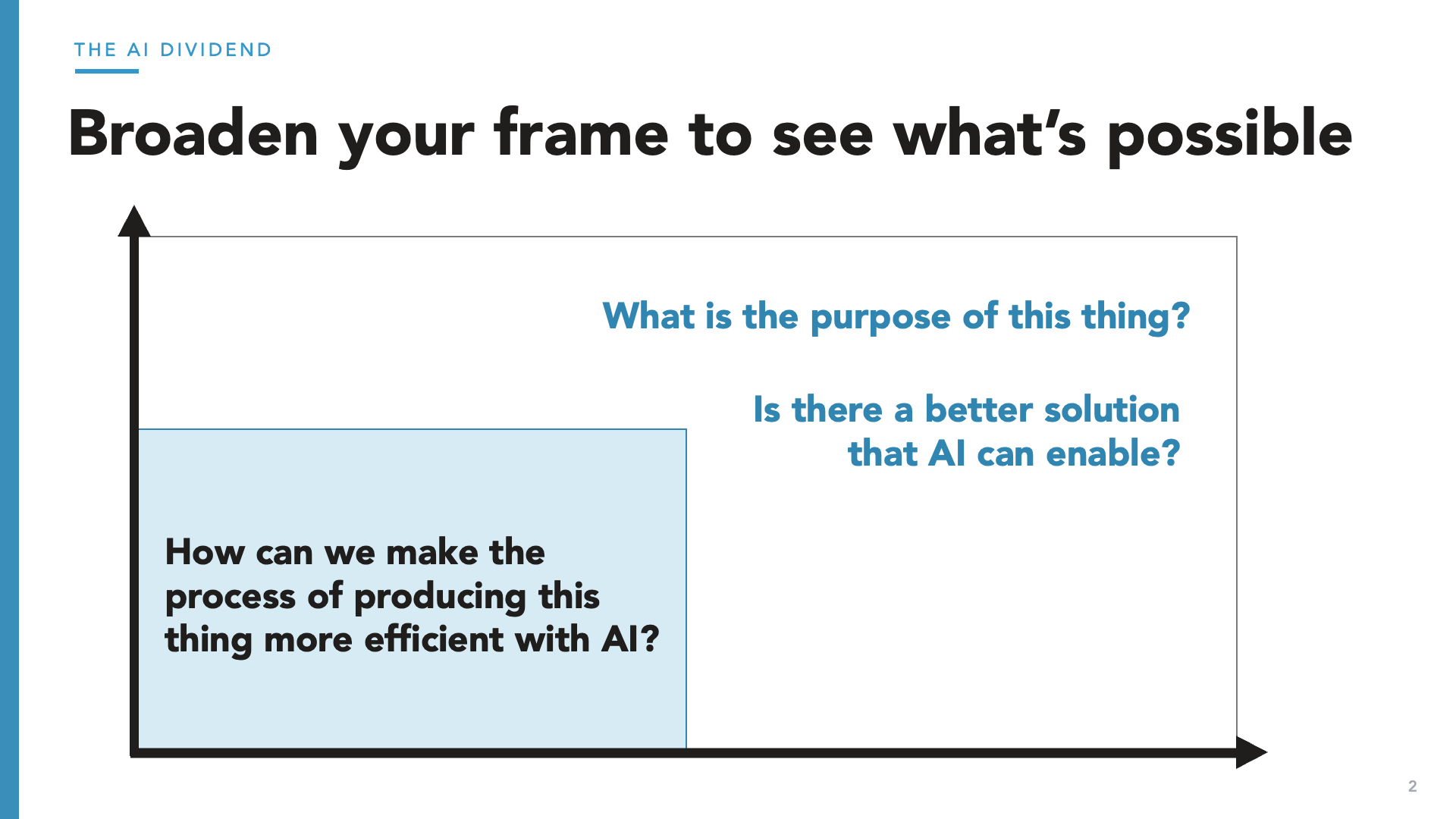
Most of what I deliver as a consultant and trainer ends up as a document: a digital strategy, a marketing plan, a technology roadmap, a training curriculum. This is the case for many of us. AI helps me produce those faster than before, so how do I reinvest that dividend?
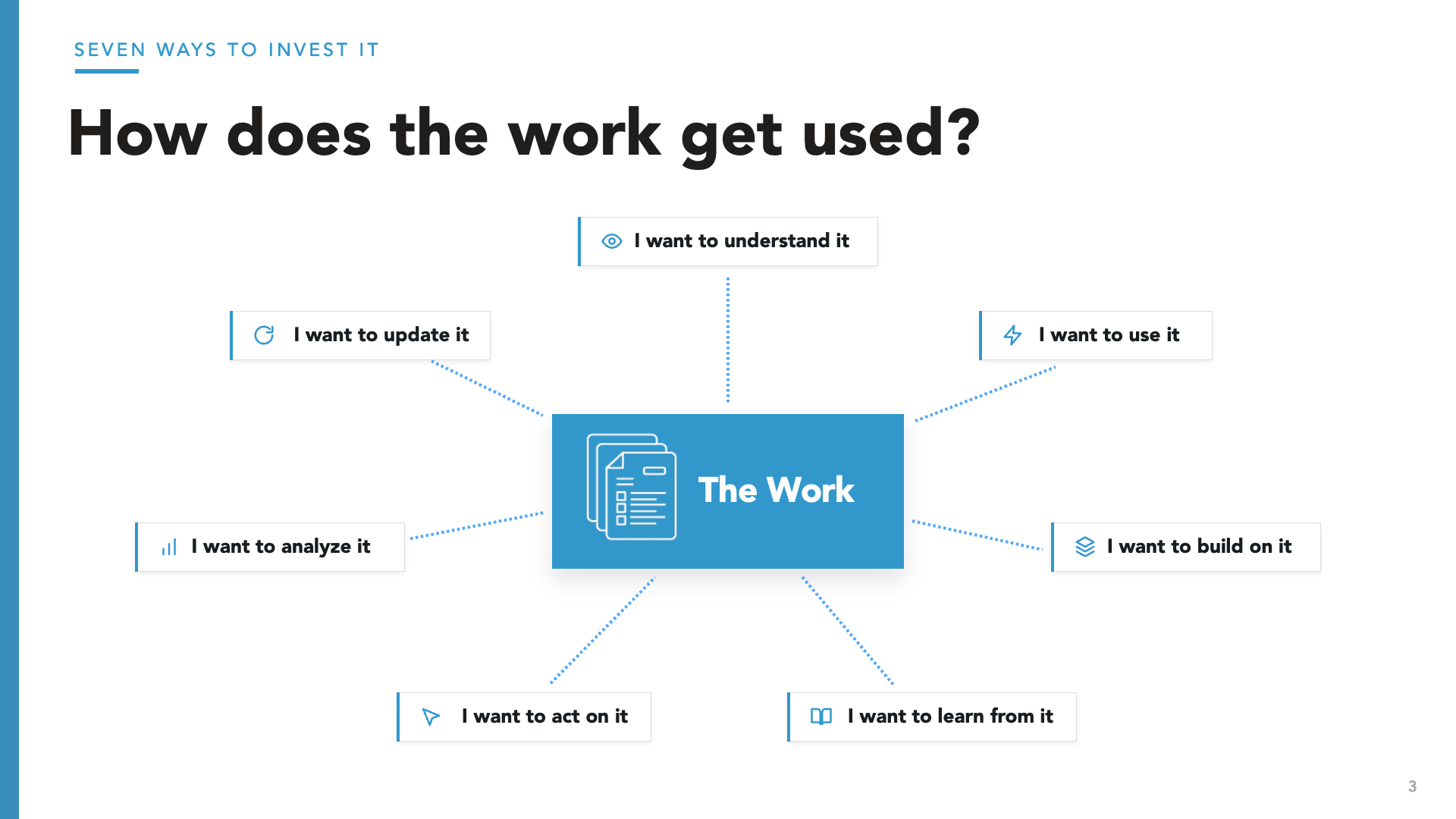
One way is to treat what you’ve created as the source of truth (as every consultant does!), then consider the context of use: how it will be used by different people, in different situations. Someone wants to understand it. Someone wants to apply it to work they’re creating. Someone wants to analyze it, act on it, learn from it, update it, build on it. Many different contexts from one static file. How can AI better serve those contexts?
Seven ways to invest the dividend
During the session, I worked through a fictional Canadian Tire 2027 marketing plan, and showed seven uses aligned with different AI capabilities:
Understand. A project workspace where anyone can ask the plan questions and get answers cited to the section.
Use. A skill that reviews creative briefs against the plan’s objectives, audience, positioning and priorities.
Connect. Connectors that read the plan alongside live campaign and market data to show where you’re off track.
Act. An agent that checks the plan against what competitors are doing each week and flags anything that should change a decision.
Interact. A simulated customer interface built from the plan’s ideal customer profile, which marketers can question and use to pressure test ideas.
Learn. An interactive scenario artifact where a new marketer practises applying the brand strategy and gets coaching across sessions.
Build. A stress test web app that takes a draft plan and shows which market factors it has no answer for, then writes the text that closes each gap.
I walk through all seven in more detail in the video below:
What this asks of leaders
Efficiency targets are easy to set and easy to measure, so it’s easy for organizations to stop there. The harder part is giving people room to spend the capacity they get back on something new, rather than absorbing it as more of the same work, or the same volume of work with fewer people. Worth asking about your own work too. How could you reinvest your AI dividend to create more value?